How does a 40,000-hour trio control a Rust server?
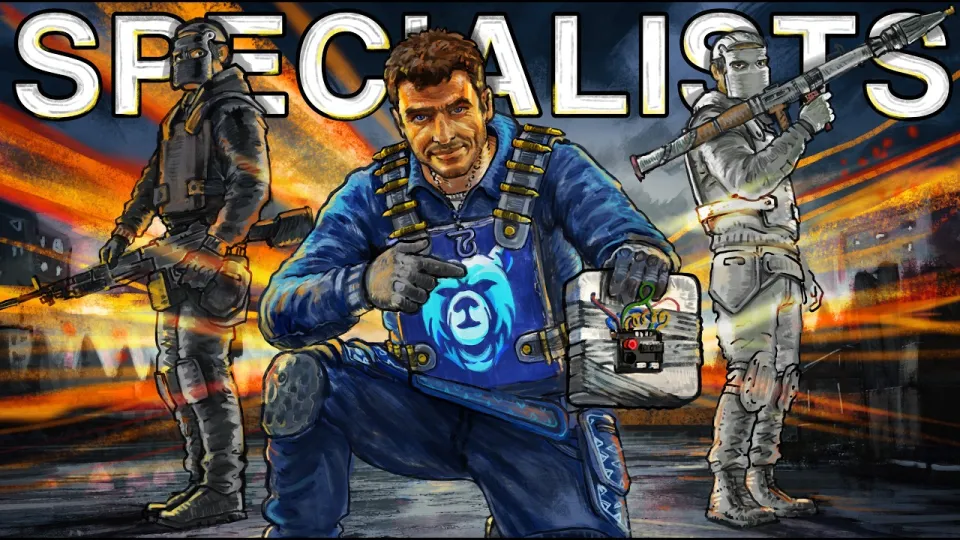
Video: How a 40,000-Hour Trio CONTROLS a SERVER - Rust
Need articles like this for your video? They help promote it on YouTube and Google — order them in the Telegram bot @sat_sit_bot. Articles with your video embedded are written and posted by the bot itself — on popular topical sites (no ads). Your first 50 articles are free.
· based on the channel Blooprint
Key takeaways
- Blooprint, Disfigure, and Nine bring roughly 40,000 combined hours to a 500+ population Rust server.
- The trio's wipe starts modestly but escalates into raiding all competition on the server.
- The video is a feature-length story, not a highlight reel, with a focus on online raids and revenge.
- Viewers praise the return of high-tier roams with M2 and L9, calling it a nostalgic throwback.
- A horse kickflip and a chimichanga line became the most-quoted moments in the comments.
A 40,000-hour trio controls a Rust server by combining deep mechanical skill, efficient base design, and relentless online pressure that leaves rivals with no safe farming window. In Blooprint's video, he and teammates Disfigure and Nine join a 500+ population server without grand plans, then snowball into raiding every competitor. You can watch the full story on Blooprint's Twitch channel, where the trio's live sessions and VODs show the same approach in real time.
What makes the 40,000-hour trio so effective on a high-pop server
Experience is the multiplier here. Blooprint, Disfigure, and Nine each bring thousands of hours, and the combined 40,000-hour figure is not just a brag; it shows up in how fast they read fights, rotate, and decide when to push. On a 500+ pop server, every decision is contested, and the trio's edge comes from pattern recognition: they know which fights are worth taking, which bases are worth raiding, and when a counter-raid is likely.
Their efficiency also comes from role clarity. One player handles scouting and flanking, another anchors with heavy gear, and the third manages logistics and base upkeep. That division lets them farm faster than most groups and recover from lost fights without collapsing. The video's early pace reflects this: a wipe that starts without ambition quickly turns into dominance because the trio never wastes a session.
How the wipe escalates from a quiet start to full server control
The progression is the story. The trio begins with standard early-game moves: establishing a base, securing a monument route, and building a stockpile of gear. But the video's description notes that things progressed quickly, and the trio soon found themselves dominating the server. That escalation is typical of high-hour groups: once they have a stable base and a few successful defenses, they convert that momentum into raids.
The turning point is usually the first online raid. Winning a defense or a raid against a comparable group signals to the server that the trio is not a soft target. From there, the raids compound. Each successful raid supplies more explosives, more gear, and more confidence, while rivals lose their stockpiles. By the time the trio is roaming with top-tier weapons like the M2 and L9, the server's power balance has shifted.
The online raid meta and why viewers call it the GOAT content
Online raids are the most demanding form of Rust PvP because both sides are active and the outcome is never scripted. The trio's raids in this video are not quick offline loot grabs; they are live fights with defenders rotating, counter-raiders arriving, and resources burning in real time. That is why comments single out the online raids as the best part of the video. One viewer even jokes about eating Chipotle faster to defend better against the trio's second raid, which captures how personal and fast-paced online raiding feels.
The trio's raid approach relies on preparation: scouting the base layout, counting doors, estimating the defenders' gear, and staging explosives and backup kits nearby. When the raid starts, they split roles again, with one player suppressing defenders while others breach. The result is a raid that looks chaotic but is actually a sequence of small, rehearsed decisions.
Gear fear, river lurkers, and the M2 debate
A recurring theme in the comments is gear fear, or the reluctance to risk high-tier loot. Viewers note that the river lurkers who roamed with an M2 earned respect because most players never take such weapons out of the base. The trio's own roams with M2 and L9 are praised as a return to "old Rust," when top-tier gear was used aggressively rather than hoarded.
This matters for server control because gear fear is a self-imposed handicap. A group that never risks its best weapons will never dominate fights against groups that do. The trio's willingness to lose kits is part of their advantage: they treat high-tier gear as a tool for generating more loot, not as a trophy. That mindset is why viewers describe the M2 and L9 roams as nostalgic and exciting at the same time.
Common viewer questions and doubts about the wipe
Some viewers question how a group can suddenly become so accurate after lurking, and others ask why the trio's raids seem to snowball so fast. These doubts are normal in Rust content because the game's pacing can look suspicious when a skilled group finds momentum. The honest answer is that high-hour players have trained aim, map knowledge, and raid math that lower-hour players lack, and a single successful raid can fund several more.
Another common question is about the video's length and structure. This is a feature-length story, not a short montage, and it includes downtime, farming, and base management alongside the fights. That structure is intentional: it shows how control is built through logistics, not just PvP. Viewers who prefer constant action may find the slower sections less exciting, but those sections explain why the trio can sustain pressure.
Why non-Rust players still get invested in the story
Rust is a game many people never install, yet the comments show that viewers laugh, get excited, and feel heartbroken alongside the trio. The reason is that the video works as a narrative: there are setbacks, rivalries, and payoffs. The horse kickflip that launched a mini into oblivion and the chimichanga line after a full wipe of raiders are funny because they break tension at the right moments.
That storytelling is a Blooprint signature. Even viewers who have played less than an hour of Rust describe living entire wipes through these videos. For them, the appeal is not the mechanics but the human drama of a group trying to control a hostile server.
Useful links
- Blooprint on Twitch — live Rust gameplay and VODs.
- Blooprint on Kick — alternative streaming platform.
- Blooprint on TikTok — short clips and highlights.
- Blooprint on Twitter — updates and announcements.
- Blooprint Discord — community and server info.
Final thoughts on server control in Rust
The 40,000-hour trio controls a Rust server by turning experience into tempo: fast farming, decisive raids, and a refusal to hoard gear. Blooprint's video captures that process from a quiet start to full dominance on a 500+ pop server, and the viewer reactions show why the story resonates beyond the game itself. If you want to see the same approach live, follow Blooprint on Twitch and watch the next wipe unfold. The channel Blooprint is the author of this breakdown and the source of the trio's story.
Source: How a 40,000-Hour Trio CONTROLS a SERVER - Rust · Markdown version
Questions & answers
How many hours do Blooprint, Disfigure, and Nine have in Rust?
The video title refers to a 40,000-hour trio, which is the combined experience of Blooprint, Disfigure, and Nine. That total reflects years of playing together and individually across many wipes. High-hour players like these have trained aim, map knowledge, and raid math that give them an edge on populated servers.
Why do viewers question the trio's sudden accuracy after lurking?
Some comments express suspicion when players who seemed passive suddenly land shots. In Rust, high-hour players often lurk to gather information before committing to fights, and their aim is already trained from thousands of hours. A sudden shift in performance can look suspicious, but it is usually just a skilled group choosing when to engage.
What makes online raids more impressive than offline raids?
Online raids involve active defenders who can rotate, counter-raid, and use their own explosives, so the outcome is never guaranteed. The trio's raids in the video are praised because they are live fights with real risk. Offline raids are safer but far less dramatic, which is why viewers call the online raids the best content.
Do I need to play Rust to enjoy Blooprint's videos?
No. Many viewers have never installed Rust and still follow the story, the rivalries, and the funny moments. The videos work as narratives with setbacks and payoffs, so the human drama carries even without game knowledge. That is why comments describe living entire wipes through Blooprint's content.